Different types of annotations
Text, audio, image, or video becomes machine learning training data with annotation data, with the
help of people and technology.
Creating an AI or ML model that works as a person requires a large amount of training data. In order
for the model to make decisions and take action, it must be trained to understand certain
information about the data annotation.
Also check over Image and Video Annotation | Best in 2021
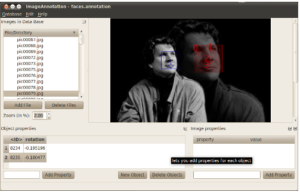
But what is annotation and types?
Annotation is the classification and labeling of data for AI applications.
Training data should be well organized and defined in a specific application environment. With high
quality, powerful human annotations, companies can build and improve AI applications. The result is
an advanced solution for the customer experience such as product recommendations, relevant
search engine results, computer vision, speech recognition, chatbots, and more.
There are a few basic types of data: text, audio, image, and video, and many companies make full
use of their offerings. In fact, according to a 2020 State of AI and Machine Learning report,
organizations said they were using 25% more data types by 2020 compared to last year. With so
many industries and workplaces working with different types of data, the need to increase
investment in reliable training data is becoming more important than ever.
Let’s take a closer look at each type of annotation, giving the context of real-world use for each type
that demonstrates its success in helping with data classification.
Text annotation
Annotation of the text remains the most widely used form, with 70% of the companies surveyed in a
machine learning report admitting to relying too much on the text. Annotation text is actually a
process of using metadata tags to highlight keywords, phrases or sentences to teach machines to
recognize and fully understand a person's feelings in words. These highlighted “feelings” are used as
training data so that the machine can process and better integrate with the natural human language
and digital text communication.
Accuracy means everything in the annotation of the text. If annotations are inaccurate, they can lead
to misinterpretations and make it very difficult to understand words in a particular context. The
machines need to understand all the possible clauses for a particular question or statement based
on how people talk or interact online. For example, consider chatbots. If the consumer poses a question in a way that the machine may not be familiar with, it may be difficult for the machine to reach the end and provide a solution.
The better the annotation of the text involved, the more often the machine is able to perform time consuming tasks that a person would normally care for. This not only creates better customer experience, but can also help the organization meet its core values and use human resources to the best of its ability. But are you familiar with the different types of annotations? Text annotations include a variety of annotations such as emotion, purpose, and question.
Emotional Annotation
Emotional analysis examines attitudes, feelings, and ideas, in order to ultimately provide useful
insights that can drive critical business decisions. That is why it is so important to have the right data
from the start.
To get that data, human annotations are often used as they can test emotions and limited content
across all web forums. From reviewing social media to eCommerce sites, tagging and reporting
offensive, sensitive, or neology keywords, people can be especially valuable in analyzing emotional
data because they understand the differences between modern styles, slang and other possible
language uses. or violate an organization's reputation if the message is misinterpreted and
misinterpreted.

Annotation of purpose
As people talk more about the interaction of human devices, machines should be able to understand
both the natural language and the purpose of the user. Generally, when the purpose is not known to
the machine, you will not be able to continue the request and you may request that the information
be renamed. If the repetition of the query has not yet been detected, the bot may transfer the query
to a human agent, thus eliminating the entire purpose of the original machine operation.
Multi-objective data collection and classification can classify objective into key categories including
request, instruction, booking, recommendation, and verification. These sections make it easy for
machines to understand the initial purpose after the question and are better distributed to complete
the application and find a solution.
Semantic Annotation
Semantic Annotation involves marking certain texts in the mind that are closely related to
information. This involves adding metadata to documents that will enrich the content of concepts
and descriptive words in an effort to provide greater depth and meaning in the text.
Semantic Annotations both improve product listings and ensure that customers can find the
products they want. This helps to convert browsers into consumers. By marking the various sections
between product titles and search queries, semantic annotation services help train your algorithm to
identify those individual components and improve all search compliance.
Named Business Annotation
Named Entity Recognition (NER) is used to identify specific businesses within the text in an effort to
obtain important information for large data sets. Information such as official names, locations,
product names and other identifiers are examples of what this annotation finds and edits.
NER systems require large amounts of manual-defined training data. Organizations such as Appen
use negatively defined business definition skills in all broader contexts, such as helping eCommerce
customers identify and tag keywords, or assisting social media companies in tagging organizations
such as people, places, companies, organizations, and topics. to assist with better targeted
advertising content.
Multi-objective data collection and classification can classify objective into key categories including
request, instruction, booking, recommendation, and verification. These sections make it easy for
machines to understand the initial purpose after the question and are better distributed to complete
the application and find a solution.
Real-world Use Story: Improving Microsoft Bing Search
Quality in Many Markets
Microsoft's Bing search engine needed big data sets to further improve the quality of its search
results - as well as the results needed to keep up with the standards of global marketing providers.
We have brought results that exceed the expectations, allowing them to grow faster in new markets.
In addition to delivering project and program management, we have provided the ability to grow
with high quality data sets. And as the Bing team continues to explore new potential search quality
information, we continue to develop, test and propose solutions that will improve their data quality.
Read the full story story
Named Business Annotation
Just as building a mother-son relationship is essential for living a quality life, building partnerships
between multiple organizations within the text can make it easier to mechanically understand the
context of a concept. Relationship Annotation is used to identify various relationships with different
parts of a document, such as resolving dependencies and reference corrections.
Get all your business need here only | Professional team. (24x7offshoring.com)
Comments
Post a Comment