How to do data labeling (best introduction to the process of data labeling)

Data annotation is considered fundamental for handling AI applications and complex ML tasks, such as autonomous driving, stock market forecasting, and more. The main task of data labeling is to select relevant labels for each piece of data, making raw and unstructured data a source of information for machine learning and training. So, how to do specific data labeling? Let's introduce it below.
How to do data labeling?
Data annotation is the process of labeling data in various formats (such as video, image, or text) so that machines can understand it. For supervised machine learning, labeled datasets are critical because ML models need to understand input patterns to process them and generate accurate results. Data labeling is a fundamental process in preparing data for machine learning tasks. It involves assigning meaningful labels or annotations to raw data, enabling machine learning algorithms to learn and make accurate predictions. If you're interested in understanding how to perform data labeling effectively, follow this step-by-step guide:- Understand the Task: Begin by gaining a clear understanding of the data labeling task at hand. Familiarize yourself with the project requirements, guidelines, and the specific labels or annotations that need to be assigned.
- Define Labeling Guidelines: Establish clear guidelines that dictate how data should be labeled. These guidelines should include definitions and examples of each label, rules for handling ambiguous cases, and any specific instructions to ensure consistency across annotators.
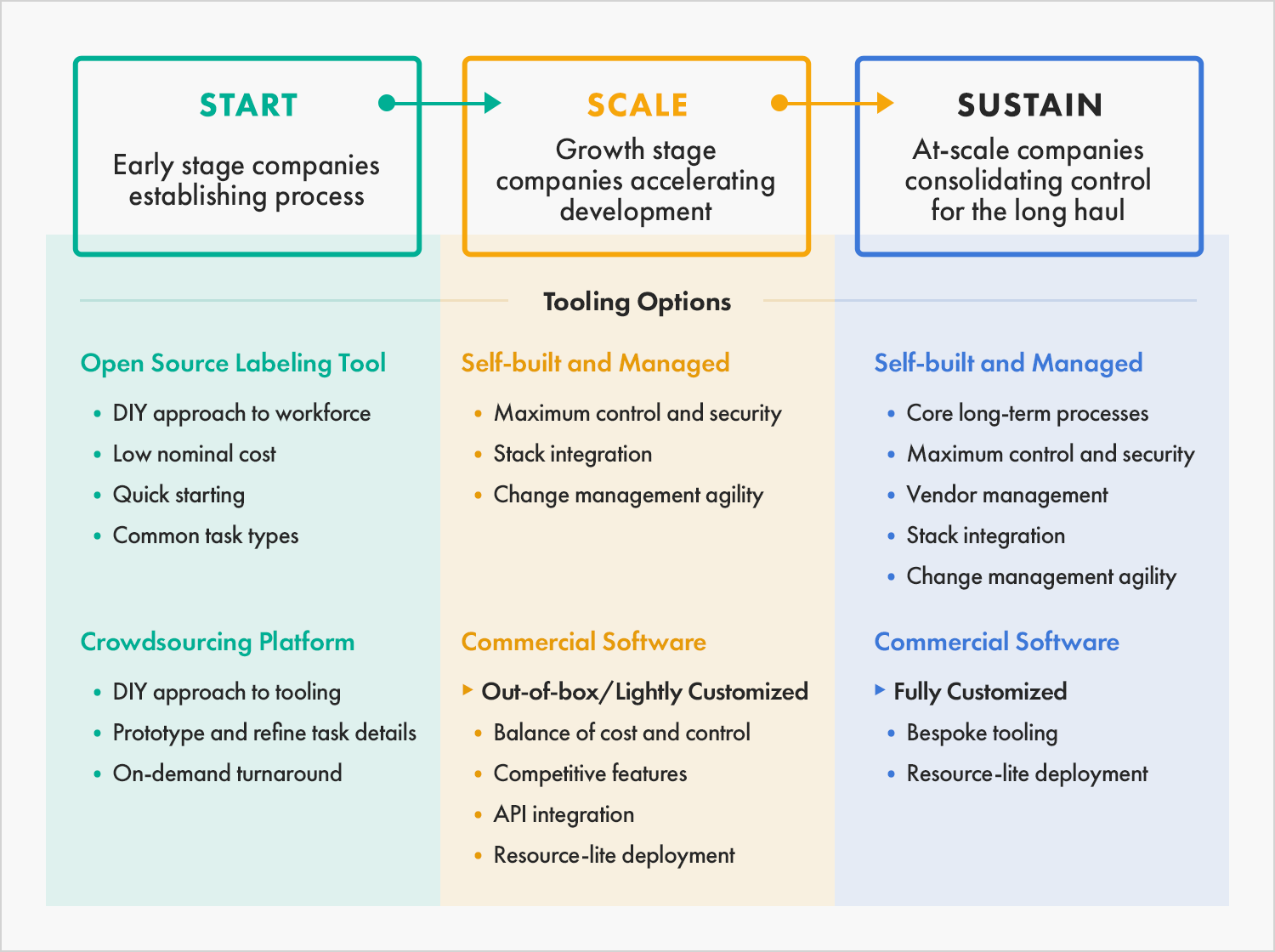
- Select a Data Labeling Tool: Choose a suitable data labeling tool that aligns with your specific task requirements. There are various tools available, ranging from open-source software to commercial platforms that provide user-friendly interfaces and collaboration features.
- Training and Calibration: Before diving into the actual labeling process, provide training and calibration to the annotators. Train them on the labeling guidelines, show them examples, and address any questions or concerns. Calibration sessions can help ensure that all annotators have a consistent understanding of the task.
- Begin Labeling: Start the labeling process by assigning labels to the data based on the predefined guidelines. Pay attention to details, follow the instructions closely, and maintain consistency throughout the process. Take breaks when needed to avoid fatigue, as labeling accuracy can be affected by mental fatigue.
- Quality Control and Review: Implement quality control measures to maintain labeling accuracy. Regularly review and check the labeled data for errors, inconsistencies, or biases. Conduct periodic reviews with annotators, provide feedback, and address any issues that arise.
- Iterative Refinement: Data labeling is often an iterative process. As the project progresses, there may be a need to refine or update labeling guidelines, clarify instructions, or address challenges encountered during the labeling process. Keep an open line of communication with annotators to address questions or provide clarifications.
- Consensus and Inter-Annotator Agreement: In cases where multiple annotators label the same data, establish mechanisms to ensure consensus and inter-annotator agreement. This can be achieved through periodic meetings to discuss labeling discrepancies, resolving conflicts, and ensuring a unified understanding of the labeling task.
- Documentation and Version Control: Maintain detailed documentation of the labeling process, including guidelines, changes made, and any discussions or decisions. Version control helps ensure that all stakeholders are aligned and that any updates or modifications are properly documented.
- Continuous Improvement: Aim for continuous improvement in the data labeling process. Seek feedback from annotators and stakeholders, and explore ways to optimize the process for efficiency and accuracy. Learning from the labeling experience can help enhance future labeling projects.
- By following these steps, you can effectively perform data labeling for machine learning tasks. Remember, attention to detail, clear communication, and consistency are key factors in ensuring the accuracy and quality of the labeled data, which ultimately contributes to the success of machine learning models.
3. Data annotation
After the data is cleaned, it can enter the core link of data labeling . In the actual labeling work, the administrator will divide the data to be labeled into different package tasks according to different requirements. Each task will have different specifications and labeling form requirements, and then assign labeling tasks Labeling work for multiple labelers. In the realm of machine learning, annotation plays a critical role in training algorithms and improving the accuracy of models. annotation, also known as labeling, is the process of adding relevant , tags, or labels to raw to provide meaningful information for machine learning algorithms. In this article, we will explore the concept of annotation, its importance, and the different methods used in this process. annotation involves human annotators reviewing and analyzing raw to assign labels or annotations that enable machine learning algorithms to learn patterns and make accurate predictions. The labeled serves as a reference or ground truth for algorithms, guiding them in recognizing and understanding patterns, objects, or concepts within the . The process of annotation requires expertise and domain knowledge. Annotators undergo training to understand the specific requirements of the task and apply consistent labeling practices. They follow guidelines and predefined rules to ensure uniformity and maintain the quality of the labeled . There are various methods and techniques used in annotation, depending on the nature of the and the specific task:- Image and Object Annotation:
- Image Classification: Annotators assign labels or tags to images based on their content, such as identifying objects, scenes, or specific features.
- Object Detection: Annotators draw bounding boxes around objects of interest within images, enabling algorithms to detect and locate similar objects in new.
- Semantic Segmentation: Annotators assign pixel-level labels to identify and classify different regions or objects within an image.
- Text Annotation:
- Named Entity Recognition: Annotators identify and tag specific entities within text, such as names, organizations, locations, or dates.
- Sentiment Analysis: Annotators classify text according to sentiment or emotion, such as positive, negative, or neutral.
- Text Categorization: Annotators assign predefined categories or topics to classify text documents based on their content.
- Speech and Audio Annotation:
- Speech Recognition: Annotators transcribe spoken words or phrases to create a labeled for training speech recognition algorithms.
- Speaker Diarization: Annotators segment audio recordings based on different speakers' voices, enabling algorithms to differentiate between speakers.
- Emotion Recognition: Annotators label audio recordings based on the emotional content expressed, such as happiness, sadness, or anger.
- Training Quality: High-quality labeled is essential for training accurate and reliable machine learning models. Well-annotated ensures that algorithms learn the correct patterns and make accurate predictions.
- Model Performance Improvement: Properly annotated helps improve the performance of machine learning models over time. As models are trained on more annotated, they become more accurate and capable of handling real-world scenarios.
- Human Expertise: Human annotators bring their domain knowledge and expertise to the annotation process. Their understanding of context, nuances, and complex patterns helps create more meaningful and accurate annotations.
- Error Detection and Correction: annotation allows for error detection and correction in the training. Annotators can identify and rectify any inconsistencies, errors, or biases in the, ensuring the model is trained on accurate and unbiased information.
- Profiling:
- profiling involves analyzing the statistical properties of the, such as the distribution of values, the presence of missing values, or the range of numerical variables.
- Profiling techniques, such as summary statistics, histograms, or box plots, provide insights into the structure, patterns, and potential issues.
- Cleansing:
- cleansing involves addressing issues identified during profiling. It includes tasks such as handling missing values, correcting errors, removing duplicates, or resolving inconsistencies.
- Techniques like imputation, filtering, or transformation can be used to clean and preprocess the, ensuring its integrity and reliability.
- Outlier Detection:
- Outliers are points that deviate significantly from the normal distribution or expected patterns. Outlier detection techniques, such as statistical methods or machine learning algorithms, help identify and handle outliers appropriately.
- Handling outliers can involve removing them, imputing missing values based on neighboring points, or treating them as a separate category if they hold important information.
- Validation:
- validation involves verifying the correctness and accuracy of the against predefined rules or constraints. It ensures that the conforms to expected formats, ranges, or relationships.
- Validation techniques, such as rule-based checks or cross-referencing with external sources, help identify inconsistencies or errors in the.
- Bias Detection and Mitigation:
- Bias in refers to systematic errors or prejudices that may skew the performance or outcomes of machine learning models.
- Bias detection techniques involve examining the for potential biases related to factors like demographic representation, sample selection, or collection processes.
- Bias mitigation techniques, such as augmentation, reweighting, or fairness-aware algorithms, aim to reduce or eliminate biases in the and ensure fair and unbiased model predictions.
- Documentation:
- Documenting the inspection process is crucial for transparency and reproducibility. It includes recording the steps taken, decisions made, and any issues or anomalies identified during the inspection process.
- Comprehensive documentation facilitates collaboration among scientists, ensures provenance, and helps in addressing future challenges or concerns.
What are the main challenges in labeling?
 1. The cost of labeling
labeling is generally done manually, and labeling data requires a lot of manpower, and it is also necessary to maintain the quality of the . Therefore, labeling requires a lot of labor and management costs.
labeling is a crucial step in training machine learning models, but it comes with a cost. Labeling involves assigning meaningful tags or annotations to raw , enabling algorithms to learn patterns and make accurate predictions. However, the process of labeling requires resources, including time, effort, and expertise. In this article, we will explore the cost considerations of labeling and the strategies to balance resources while ensuring labeling accuracy.
1. The cost of labeling
labeling is generally done manually, and labeling data requires a lot of manpower, and it is also necessary to maintain the quality of the . Therefore, labeling requires a lot of labor and management costs.
labeling is a crucial step in training machine learning models, but it comes with a cost. Labeling involves assigning meaningful tags or annotations to raw , enabling algorithms to learn patterns and make accurate predictions. However, the process of labeling requires resources, including time, effort, and expertise. In this article, we will explore the cost considerations of labeling and the strategies to balance resources while ensuring labeling accuracy.
- Time and Effort: labeling can be a time-consuming and labor-intensive task. The amount of time and effort required depends on the complexity and volume of the, as well as the specific annotation task. Textual or image-based may require manual labeling, which can be more time-consuming compared to automated approaches for structured.
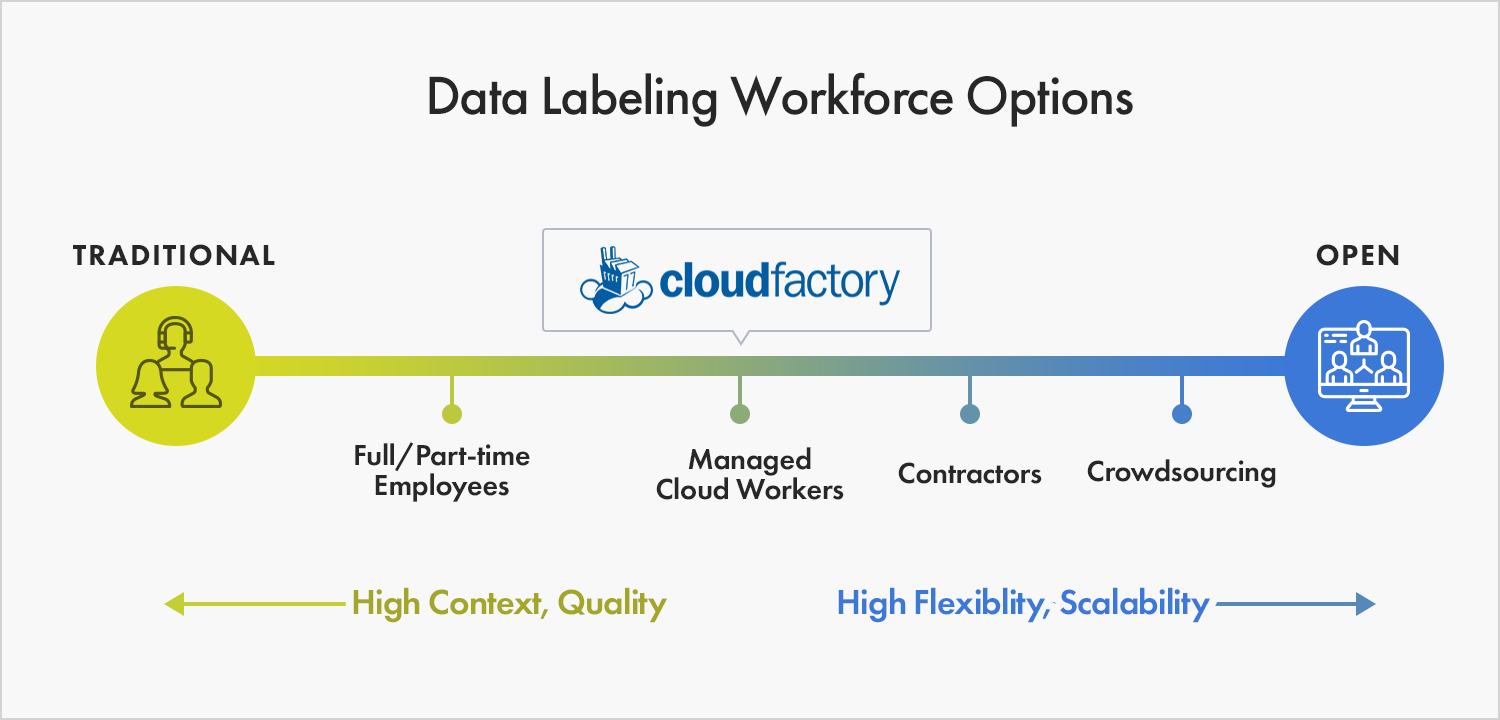
- Human Expertise: labeling often requires human expertise and domain knowledge. Skilled annotators are needed to understand the labeling guidelines, make accurate judgments, and handle complex cases. Acquiring and retaining experienced annotators can be a challenge, as it may involve hiring, training, and ongoing quality assurance efforts.
- Scalability: The cost of labeling can increase significantly as the volume of grows. Large-scale labeling projects may require substantial resources to ensure timely and accurate completion. Scaling the labeling process may involve allocating more resources, implementing efficient workflows, or leveraging automation techniques where applicable.
- Quality Control: Maintaining labeling accuracy and consistency is crucial, but it requires additional resources. Quality control measures, such as regular reviews, feedback sessions, and inter-annotator agreement checks, help ensure high-quality labeled . These activities consume resources but are essential for reliable machine learning models.
- Iterative Refinement: labeling may involve iterations and refinements as models evolve or new requirements emerge. Revisiting and updating labeled can incur additional costs, particularly if it requires revising existing annotations or incorporating new labels. Flexibility and adaptability are necessary to accommodate such changes.
- Prioritization: Prioritize the labeling efforts by focusing on the most critical or high-impact subsets. Allocate resources based on the potential value or relevance of the labeled to the specific task or problem at hand.
- Automation and Semi-Supervised Learning: Explore opportunities to leverage automation techniques, such as pre-labeling or active learning. Automated algorithms can help reduce the manual labeling burden, allowing annotators to focus on more challenging or nuanced labeling tasks.
- Incremental Labeling: Adopt an incremental labeling approach where is labeled in stages or batches. This allows for a progressive and iterative process, allowing the assessment of model performance and cost-effectiveness before labeling large volumes of .
- Collaboration and Crowdsourcing: Consider collaborating with external partners or engaging in crowdsourcing initiatives. This can help distribute the labeling workload and tap into a wider pool of annotators, potentially reducing costs while maintaining labeling quality.
- Continuous Learning: Foster a culture of continuous learning and improvement within the labeling process. Regularly review and refine labeling guidelines, provide feedback to annotators, and encourage knowledge sharing to optimize efficiency and accuracy over time.
- Cost-Benefit Analysis: Conduct a cost-benefit analysis to assess the trade-offs between labeling accuracy and available resources. Determine the level of labeling accuracy required based on the specific task, available resources, and the impact of potential errors on downstream applications.
Comments
Post a Comment